The Country That Gave
the World Coffee
Every cup of coffee on earth traces its lineage back to one place: the forests of southwestern Ethiopia, where a goat herder named Kaldi first noticed his flock dancing after eating red cherries from a wild tree.
Where Coffee Was Born Wild and Still Grows That Way
Coffee didn't start in a plantation. It started in a forest. In the highlands of southwestern Ethiopia — in the regions of Kaffa, Jimma, and the Hararghe plateau — Coffea arabica still grows as a wild plant beneath the canopy of indigenous trees. No one planted it. No one cultivated it. It just grew.
The legend of Kaldi, the 9th-century goat herder who noticed his flock leaping with unusual energy after eating red cherries, may or may not be historically accurate. But it captures something true: Ethiopian coffee wasn't engineered or discovered in a lab. It was found, in the wild, by people paying close attention to the world around them.
For centuries, coffee was consumed in Ethiopia as a food — the cherries ground with animal fat and formed into small balls eaten for energy on long journeys. The practice of roasting and brewing the beans as a drink came later, spreading north through the Arabian Peninsula, where it became the cornerstone of coffeehouse culture before reaching Europe and the Americas.
Today, Ethiopia produces some of the world's most complex, distinctive coffees — the Yirgacheffe washed process with its extraordinary floral and citrus clarity, the Guji naturals with their explosive fruit character, the Sidama washed with its classic lemon-peach brightness. These coffees bear no resemblance to commercial blends because they come from a genetic and environmental context that can't be replicated anywhere else on earth.
When you drink an Ethiopian coffee, you're drinking the original. Everything else is a descendant.
The Zones That Define Ethiopian Coffee
Ethiopia's coffee diversity is staggering — each growing zone produces a flavor profile so distinct that experienced tasters can identify the origin blind.
The world's most celebrated single-origin. Yirgacheffe produces coffees of extraordinary delicacy — jasmine florals, bergamot citrus, and in the natural process, blueberry so intense it stops you mid-sip. The terroir here is unique: the altitude, the heirloom varieties, and the centuries of forest management produce something that has no parallel.
Sidama is the region that defined the "bright, clean Ethiopian" profile — crisp lemon, sweet peach, and a clarity that seems to ring like a bell in the cup. The cooperative structure here is exceptional, with quality control at the washing station level that rivals anything in the specialty world.
Guji has become one of the most sought-after names in specialty coffee — a newer growing designation carved from Sidama, now recognized independently for its spectacular natural-process coffees. Dark cherry, milk chocolate, and a syrupy sweetness that makes washed-coffee drinkers seriously reconsider their preferences.
The Ethiopian Coffee Ceremony: Three Rounds, Three Names
In Ethiopia, coffee is not a morning ritual of convenience. It is a ceremony — a social institution that can last two to three hours and is considered one of the highest forms of hospitality a host can offer.
The ceremony begins with raw green beans, washed and roasted over a small charcoal brazier. The roasted beans are ground by hand with a mortar and pestle and brewed in a clay pot called a jebena. The coffee is served in small handleless cups called sini, often sweetened with sugar and sometimes flavored with salt or butter in rural regions.
The ceremony has three rounds, each with a name: Abol (the first and strongest), Tona (the second, slightly lighter), and Baraka (the third, meaning "blessing"). To leave after just one cup is considered impolite. The full ceremony is the point.
Shop Ethiopia Coffees
Three distinct expressions of Ethiopian terroir — from the floral heights of Yirgacheffe to the bold naturals of Guji.

Blueberry jam, jasmine florals, and a wine-like body that makes you question everything you knew about coffee.
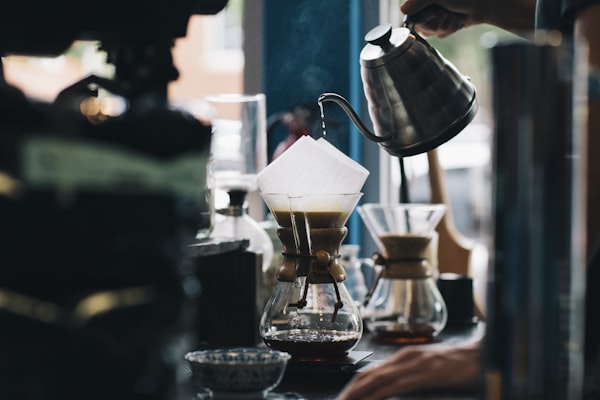
Crisp lemon brightness, peach sweetness, and a tea-like clarity that defines the washed Ethiopian profile.

Dark cherry, milk chocolate, and a sticky sweetness — the boldest expression of Ethiopian naturals.
The Ethiopia Coffee Guide — Free
Your complete guide to Ethiopian coffee: the regions, the processing methods, the flavor profiles, and how to brew each one perfectly. 12 pages, beautifully designed, yours free.
Go deeper →
Ethiopian Yirgacheffe: Why It's the World's Most Complex CupExplore More Origins